
Method & Materials
Everything the wine touches
The oak, the cork, the fruit and the hands that farmed it. What follows is what we buy, who makes it and why we pay for it.
We do not cut corners. Every material that touches these wines is the best we can find, bought from the people who make it best.
A wine can only be as good as what goes into it and what holds it. Oak that was dried too fast will mark a Chardonnay for its whole life. A cork sorted carelessly will undo ten years of patient work in the cellar. Fruit farmed for yield will taste like fruit farmed for yield.
So we buy from a short list of makers and growers, we buy the same things every year, and we pay what they cost. None of it is a bargain. All of it is in the glass.

01
Oak
Damy of Meursault
Our barrels are built by Tonnellerie Damy in Meursault, at the heart of the Côte de Beaune. Roger Damy founded the cooperage in 1946. His family has run it for three generations since, and it now employs 35 coopers, two of whom hold the title of Meilleur Ouvrier de France.
Damy is one of the few cooperages that still lets a winemaker choose oak by the forest it grew in, so the wood in our barrels is selected rather than assigned. The staves are stacked outdoors and left to season in the weather for 24 to 36 months before anyone builds a barrel from them. That patience is the whole point. Slow-dried oak gives a wine texture and lift; kiln-dried oak gives it a taste of wood.
Every barrel is toasted to our specification over a fire, by hand, by a cooper who has made thousands of them.


- Cooperage
- Tonnellerie Damy, Meursault
- Founded
- 1946, third generation
- Oak
- French, selected by forest of origin
- Seasoning
- Outdoors, 24–36 months
- Toast
- By hand, to specification
- Certification
- CTB and PEFC

02
Closure
Aquitaine Liège
Our corks come from Aquitaine Liège, an independent, family-run house at Canéjan outside Bordeaux that has been advising producers on cork for more than 25 years. They are small enough to answer the phone and large enough to hold a standard.
Natural cork, whole and single-piece. Every batch that arrives at their warehouse is tested by their quality department and by an outside network of laboratories, then sorted at least twice, first by machine and again by hand, so that what reaches our bottling line is uniform. Their tasting panel puts 2,500 corks a week through sensory analysis.
Cork is the one material a customer opens, smells and holds. It is not a place to save money.


- Supplier
- Aquitaine Liège, Canéjan
- Ownership
- Independent, family-run
- Closure
- Whole natural cork
- Testing
- 2,500 corks a week, sensory panel
- Sorting
- Optical, then by hand

03
Fruit
Farmed by the best
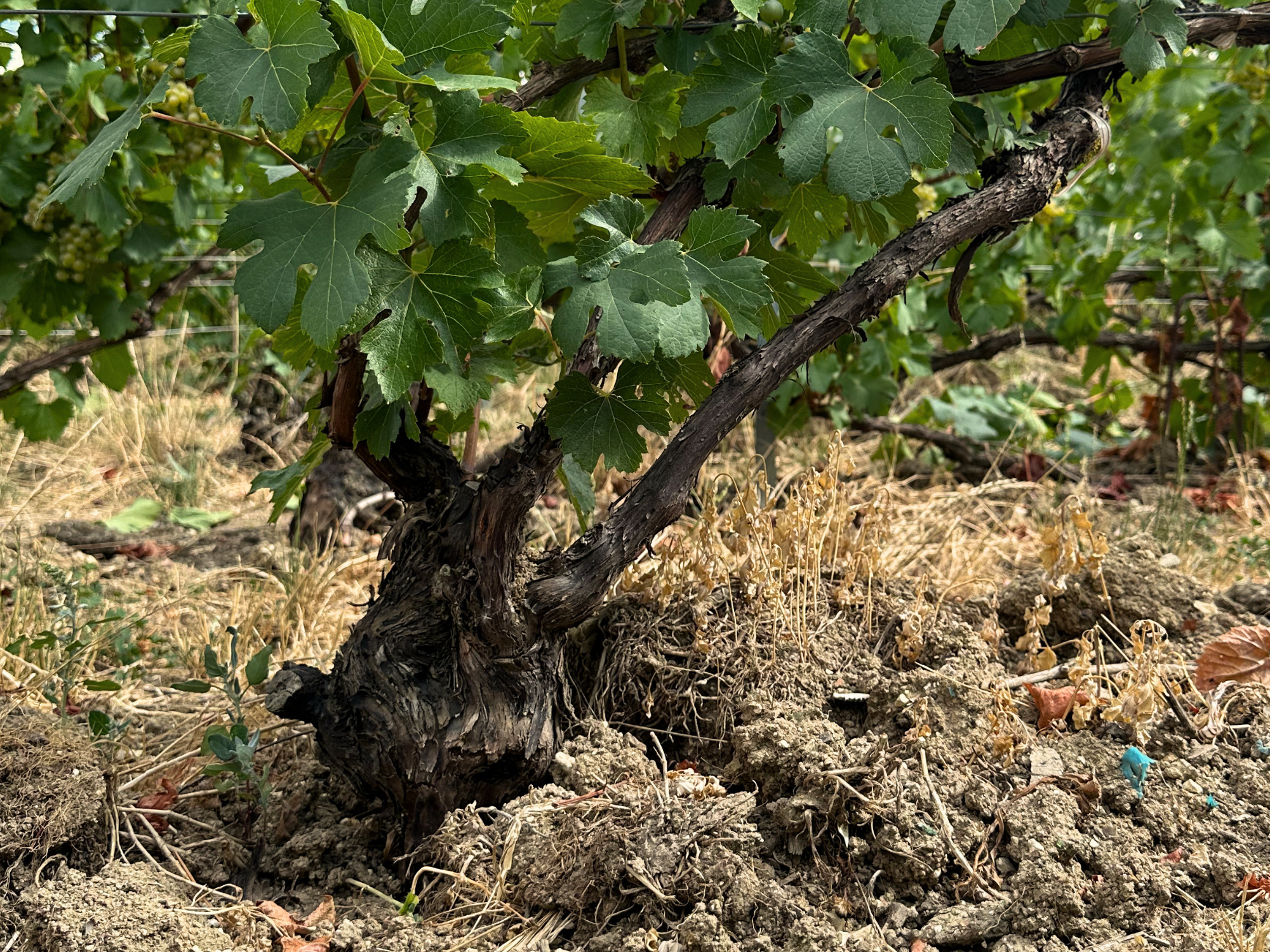
We own no vineyards. We buy fruit, which means we get to choose the farmers, and we choose the ones who are the best at it. Every grower we work with farms biodynamically or organically.
These are sites farmed by people who have spent their working lives on the same hillsides: Seven Springs, Shea, Hyland, Chehalem Mountain, Koosah, Royer and Stardance. We pay for the blocks we want, we pick when the fruit is ready rather than when the schedule says so, and each wine is bottled under the name of the vineyard that made it.
In Burgundy and Champagne the same rule applies through our partners: Guillaume Lafon and Pierre Meurgey at Château de Bligny-lès-Beaune, and Champagne Paul Launois.
In the cellar


Taste the difference it makes
The wines these materials were bought for, from the Willamette Valley, Burgundy and Champagne.