Hidden Treasures of the Coast Range: Foraging Oregon’s Wild Mushrooms
When the final barrels are sealed and the last grapes have been pressed, a hush settles over the Willamette Valley. The long, golden days of harvest yield to cool mornings, soft fog, and the scent of rain on forest soil. For winemakers, this is a time of reflection, when the energy of the vineyard gives way to the calm of the cellar.
It is also the moment when the forest begins to give back.
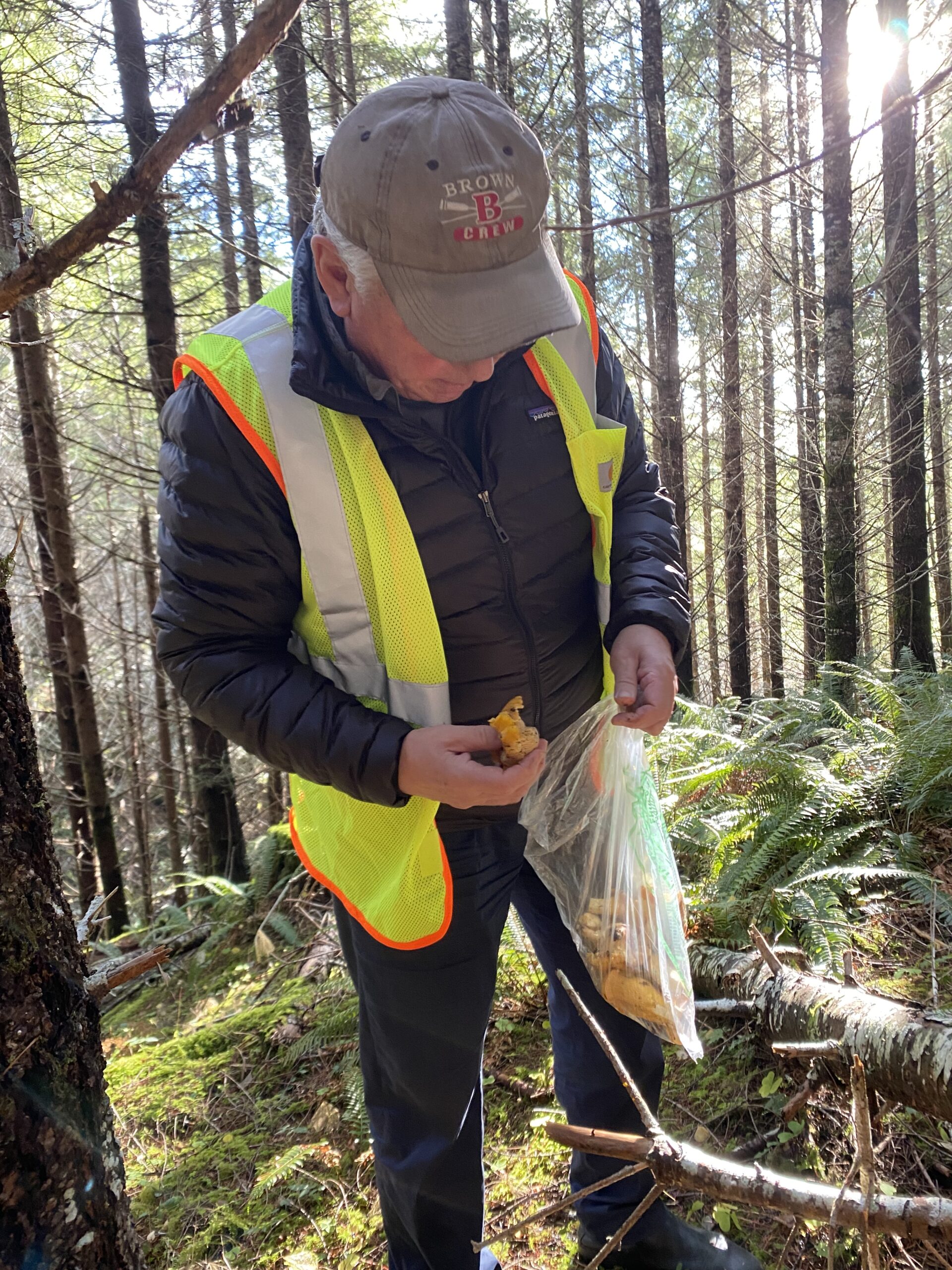
00 Winemakers Chris and Kathryn Hermann turn their attention from vineyard rows to towering Douglas Fir trees. Like many Willamette Valley winemakers in late October, they drive into the Coast Range, drawn by the promise of chanterelles emerging from the damp autumn earth.
The forest offers a different kind of harvest, one guided not by cultivation but by discovery. Each outing is an invitation to slow down, to pay attention to the small details that the natural world reveals only to those who look closely.
It’s also an act of continuity. Chris began foraging for mushrooms as a child alongside his parents, learning to read the forest floor the way others learn to read a map. The ritual has endured for over sixty years, and today he shares it with his children and grandchildren, passing down not just knowledge but an appreciation for Oregon’s quiet abundance.
Mushroom hunting reconnects him to the same principles that guide his winemaking — respect for the land, an understanding of rhythm and season, and the humility to let nature lead. The forest, like the vineyard, teaches patience. Each year, it offers up something different, something fleeting, and something worth savoring.
Where the Mushrooms Grow
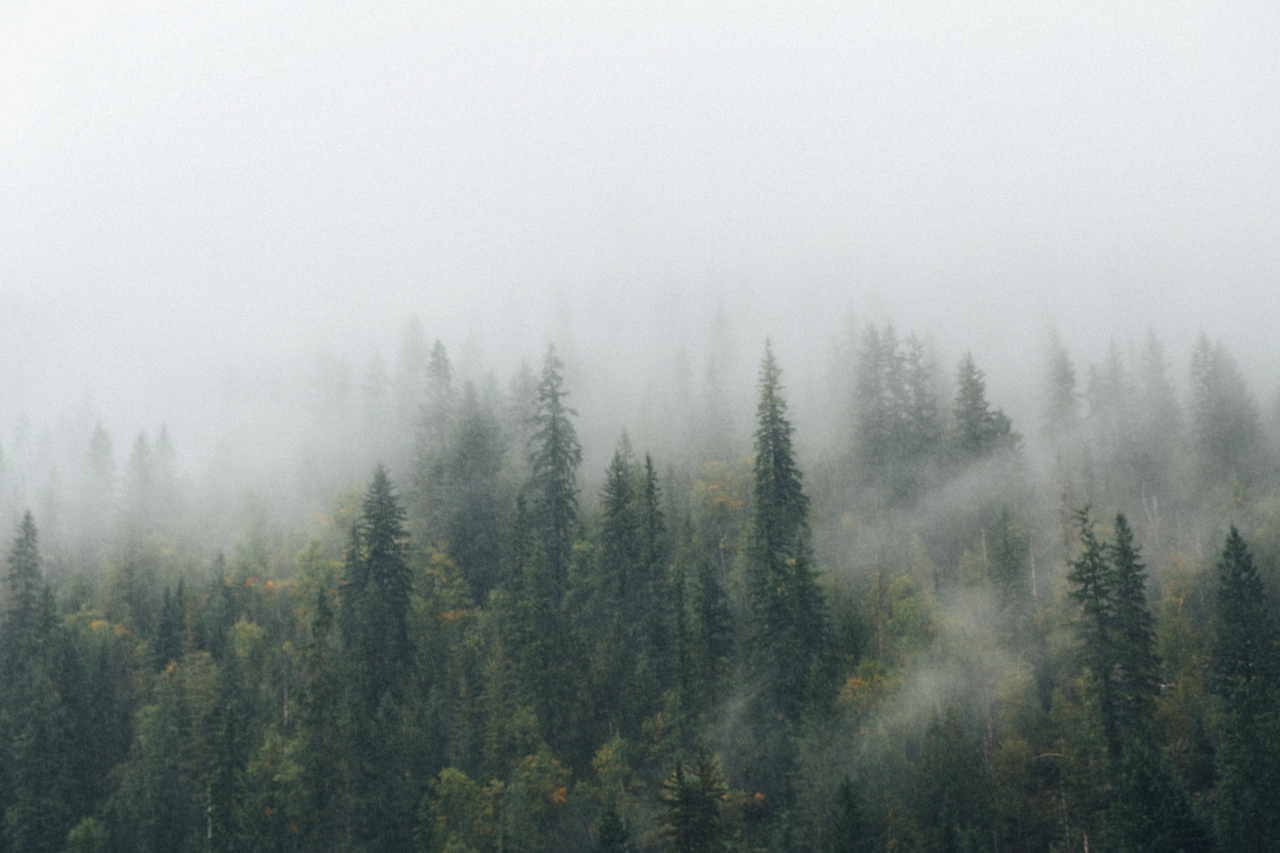
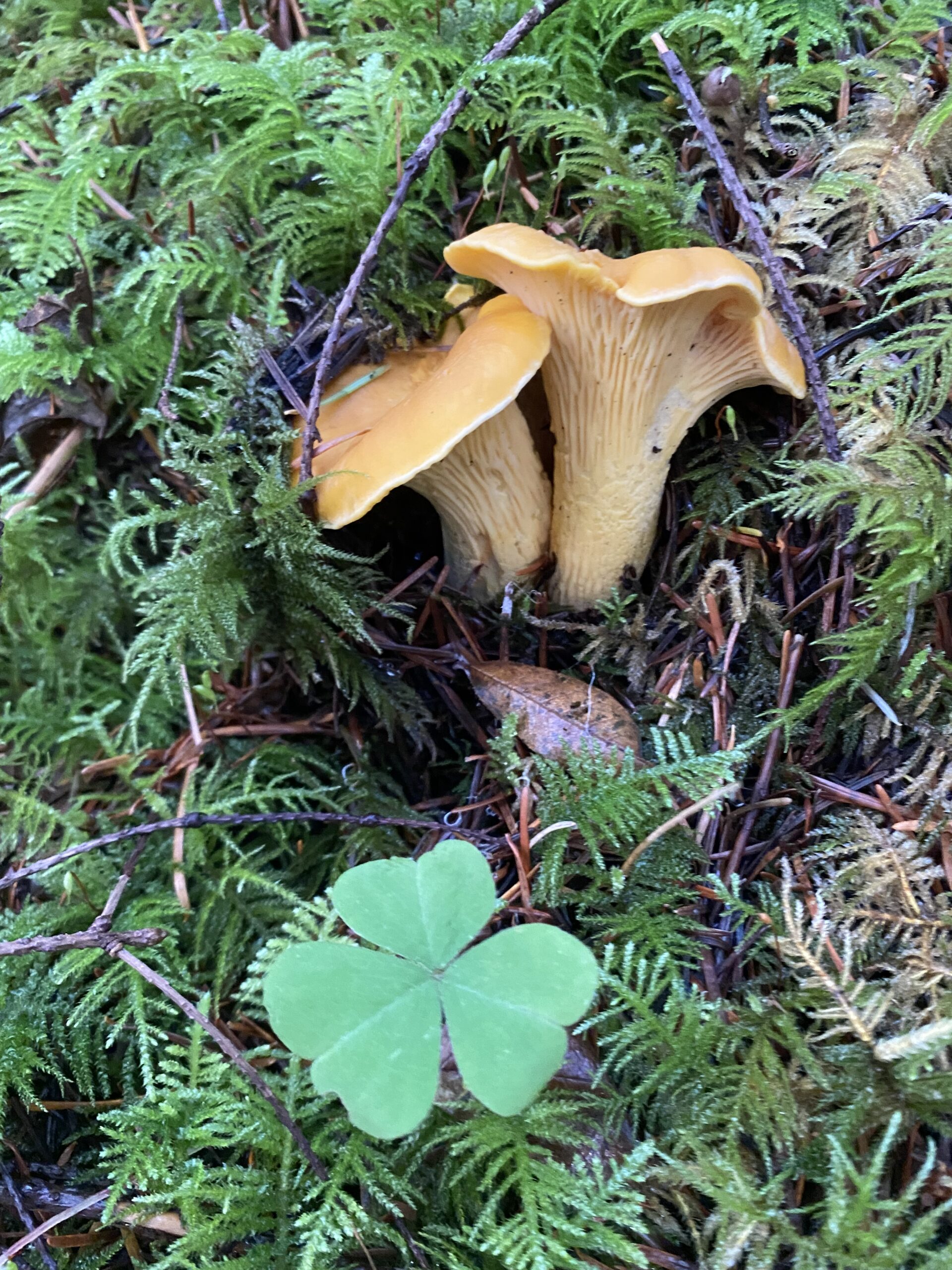 In the Coast Range, chanterelles hide in plain sight. They often appear along the edges of old logging roads and in recent clear cuts, where sunlight and moisture together coax the fruiting bodies of the mycelium above ground. They thrive on the roots of moss-covered stumps and beneath carpets of duff where Douglas Fir needles collect and decay.
To find them, you must slow down. Look for the telltale flash of gold under sword ferns, the slight rise in the forest floor where caps push through loam and moss.
At first, you’ll find nothing.
After 10 minutes, you’ll convince yourself that the drive into the woods was pretty, but a waste of time.
After 15 minutes, you’ll spot a tiny spot of yellow under a mount of moss, and your heart rate will skyrocket with anticipatory joy.
You can’t control the surge of dopamine flooding your brain. It’s primal.
You’ll see two growing next to each other, and then more, like a river of yellow pouring down into a ravine, tracing the trail of a most mycelium-covered tree root buried deep under the ground.
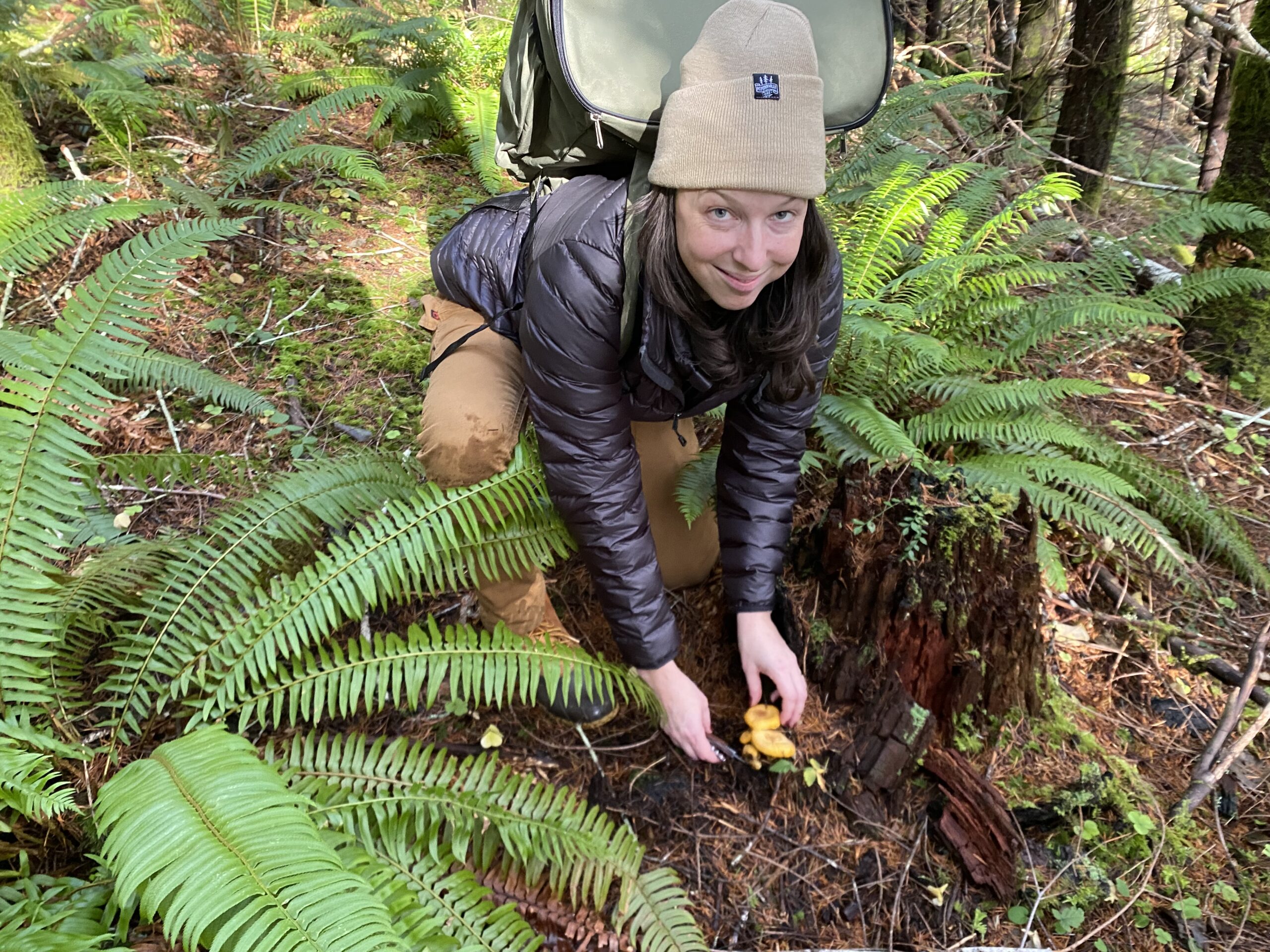 What to Bring into the Forest
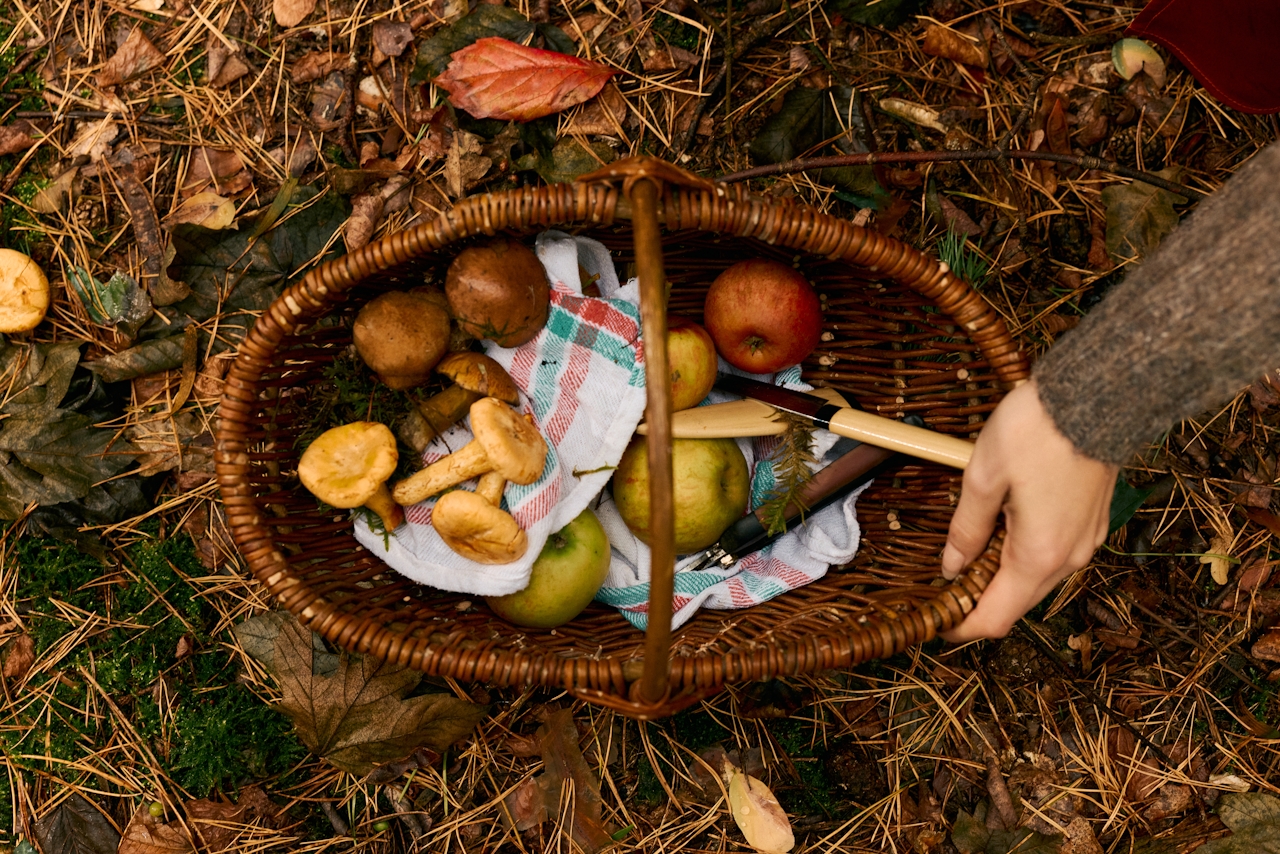
A woven basket allows air to circulate around your finds, keeping them firm and dry.
A small knife is essential for trimming stems cleanly, leaving the mycelium undisturbed so the mushrooms can fruit again next season.
Sturdy rain gear and waterproof boots are indispensable companions in Oregon’s autumn woods, where weather shifts from drizzle to downpour in a heartbeat.
A warm hat is a must, while a touch of safety orange, whether on a vest or cap, ensures visibility during hunting season.
How to Identify Common Willamette Valley Mushrooms
Foraging in Oregon is a study in observation. The Willamette Valley and Coast Range are home to an extraordinary variety of fungi, some delicious, some dangerous, and many quietly beautiful in their own right. Knowing what to look for is part of the ritual, part of the rhythm that connects each season to the next.
As weekend warrior foragers, we stick to the two most easily identifiable mushrooms: the lobster mushroom and the chanterelle.
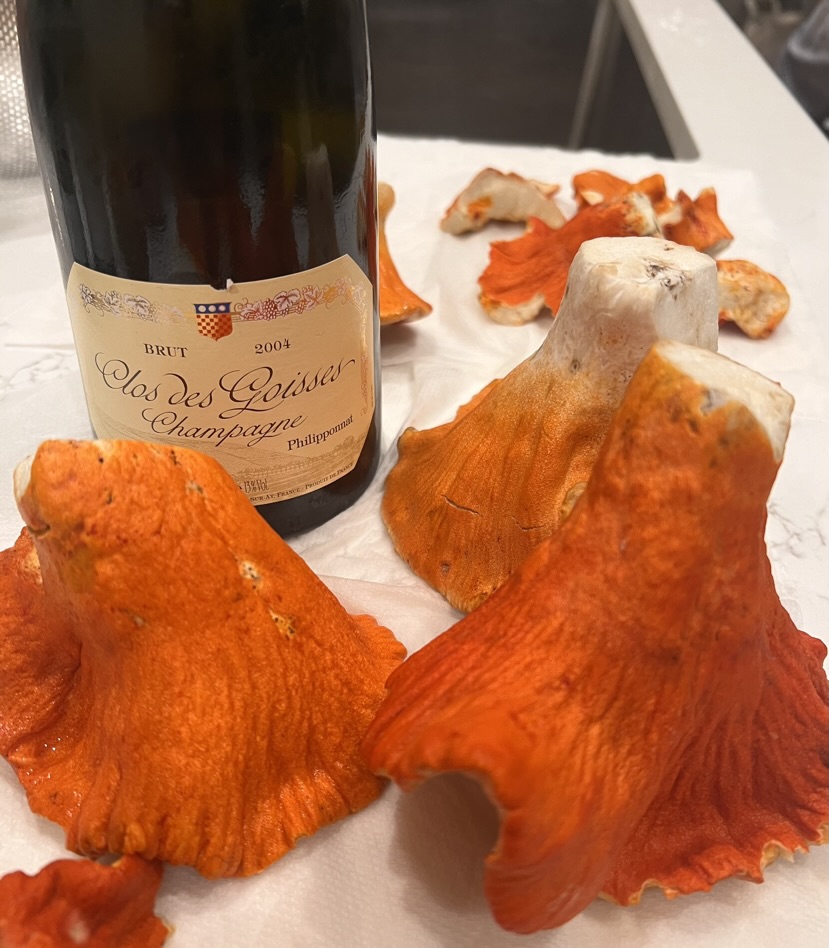
Lobster Mushroom (Hypomyces lactifluorum)
Perhaps the most striking of all, the lobster mushroom is not a mushroom in the traditional sense but rather a transformation. It begins as a host fungus, often a russula or lactarius, which is overtaken by a bright orange parasitic mold.
The result is a firm, seafood-scented mushroom with a vivid red-orange exterior and dense white flesh.
Found along logging roads and in damp conifer stands, lobster mushrooms add a rich, savory depth to soups and sautés: a true Oregon delicacy that captures the essence of the forest floor.
Like lobster itself, lobster mushrooms pair perfectly with Champagne.
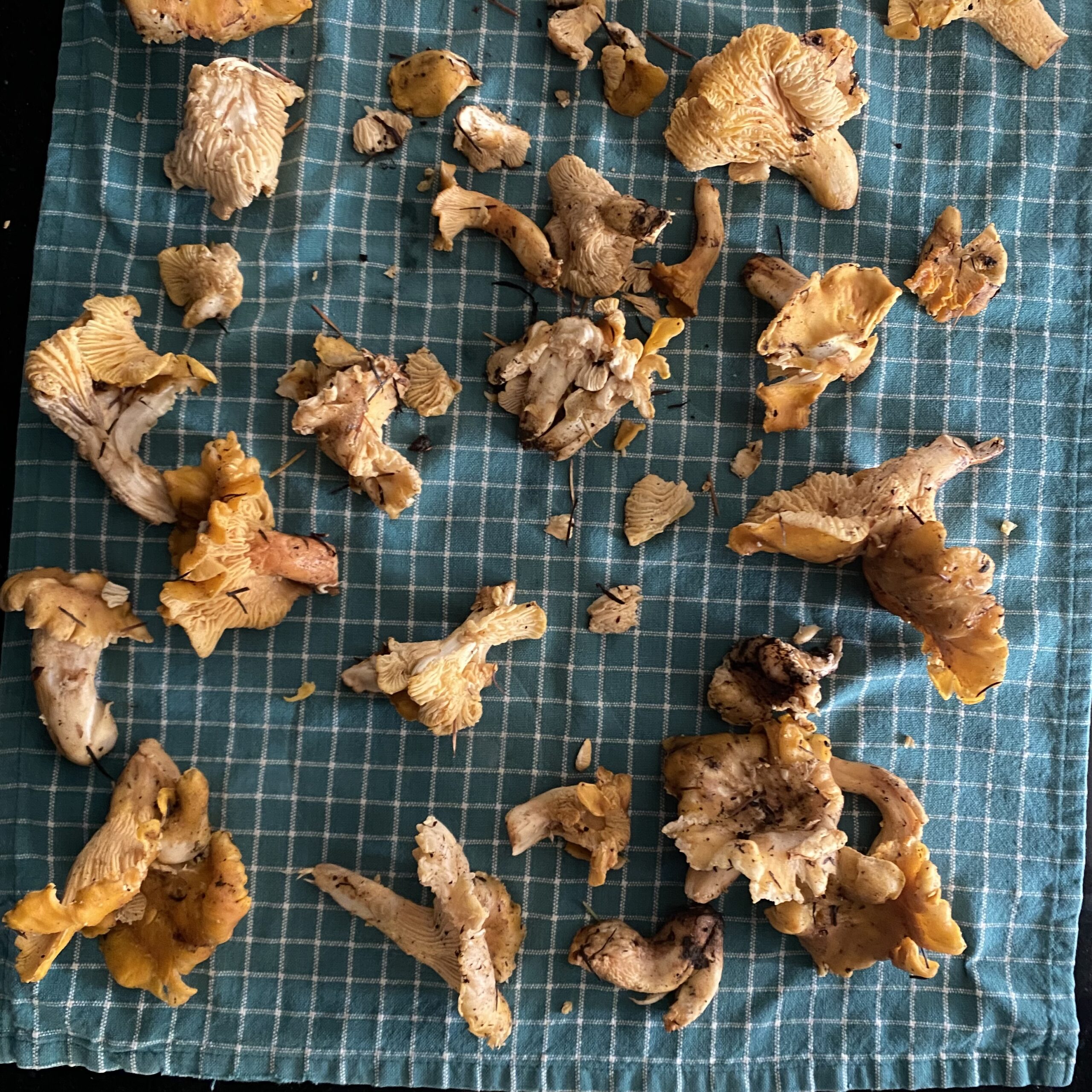
Chanterelles (Cantharellus formosus)
The golden chanterelle is Oregon’s most celebrated wild mushroom.
It grows in clusters beneath Douglas Fir trees, often along mossy slopes and near decaying wood.
Look for firm, golden caps with wavy edges and ridges (not true gills) that run down the stem.
Its aroma is distinctly fruity, with notes of apricot and earth.
This mushroom pairs perfectly with Chardonnay.
From Forest to Table
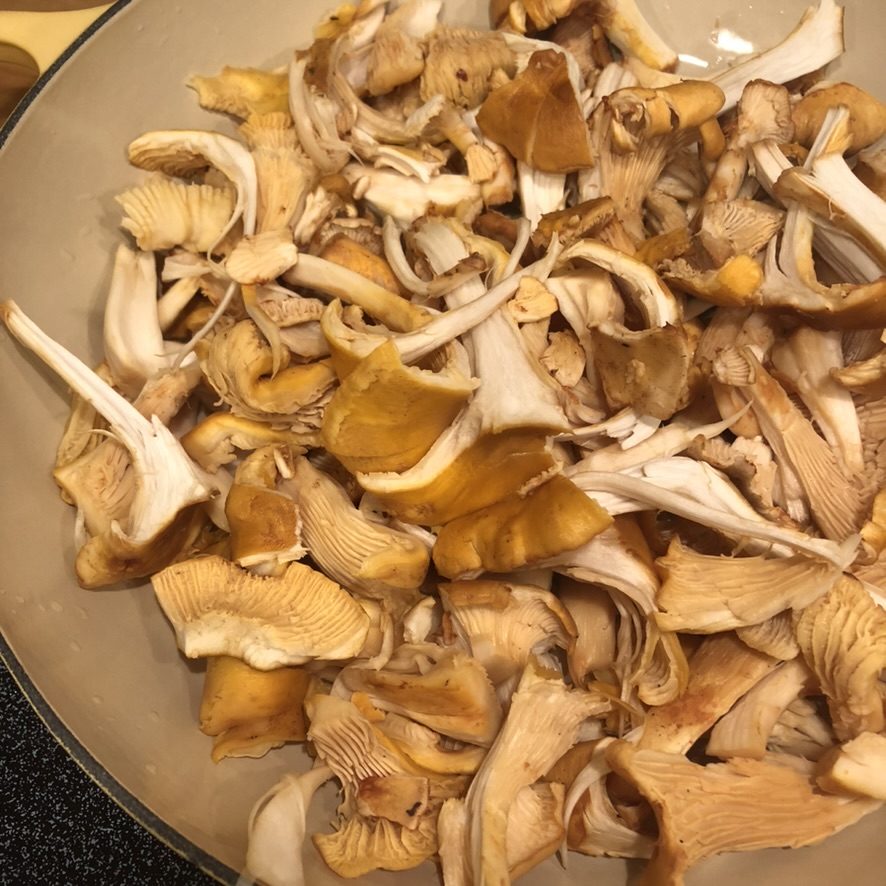
Back at home, the day’s harvest is celebrated simply, with warmth, patience, and a glass of Chardonnay.
For Chris and Kathryn, the ritual is as much about cooking together as it is about the hunt itself.
The mushrooms are brushed clean, sliced thick, and sautéed slowly in butter until their edges begin to caramelize.
Shallots and lardons join the pan, releasing a savory perfume that fills the kitchen.
A splash of white wine deglazes the fond, capturing every bit of the forest’s flavor in the sauce.
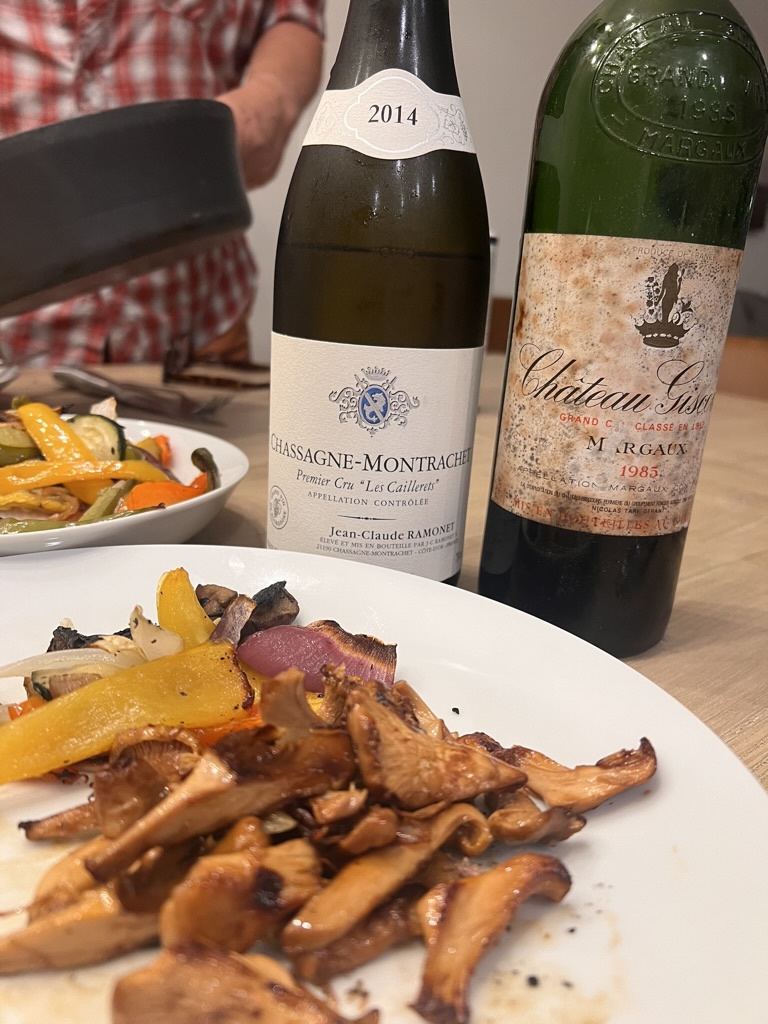

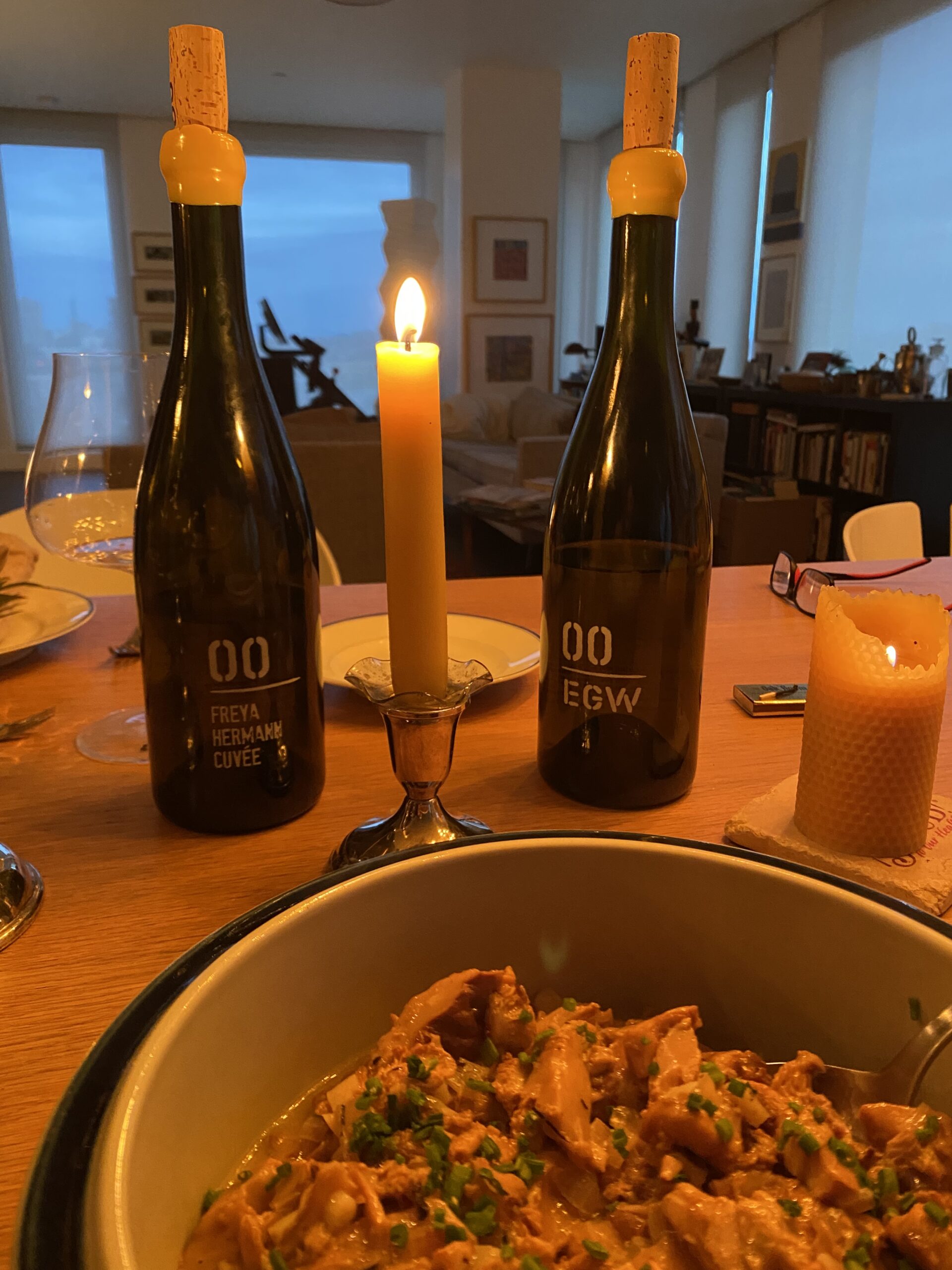
Served over rice, the dish is both rustic and refined. The chanterelles’ golden earthiness is balanced by the bright acidity of the wine and the gentle richness of the butter.
It’s a meal that reflects the season and the land, simple yet profound, much like the wines that accompany it.
A glass of 00 Wines Chardonnay brings everything into harmony, its tension and minerality echoing the forest floor’s character and the rain-soaked air of the Coast Range.
Together, they form a portrait of Oregon’s terroir, not just in the glass, but on the plate.