A Pacific Northwest Coastal Feast: A Day of Salmon Fishing with 00 Wines VGW Chardonnay
There’s something borderline decadent about grilling a salmon you pulled from the water that very morning, still shimmering with the memory of the San Juan Islands’ cool tides. There’s a certain satisfaction in setting up an impromptu table on weathered driftwood, uncorking a bottle of 00 Wines Chardonnay, its golden hue catching the last rays of sunlight, and knowing this is as close to culinary nirvana as it gets.
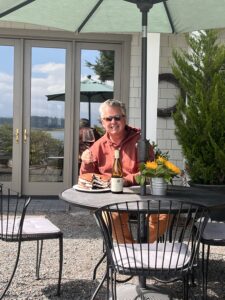 We were here for 00 Wines founder Chris Hermann’s birthday, to unwind during the last weekend before the impending harvest in the Willamette Valley.
“Let’s get away, but not too far”.
The grapes on the vine were continuing to ripen.
His gift was an AirBnb house on the water for a few days, away from the siren call of WhatsApps and compliance paperwork, on Lummi Island, Washington.
We arrived via ferry in a car packed with the only dining accessories we would need, Zaltos, and a Yeti cooler of 00 Wines Chardonnay bottles, clinking as we bumped over each divot on the island drive.
The Call of the Islands
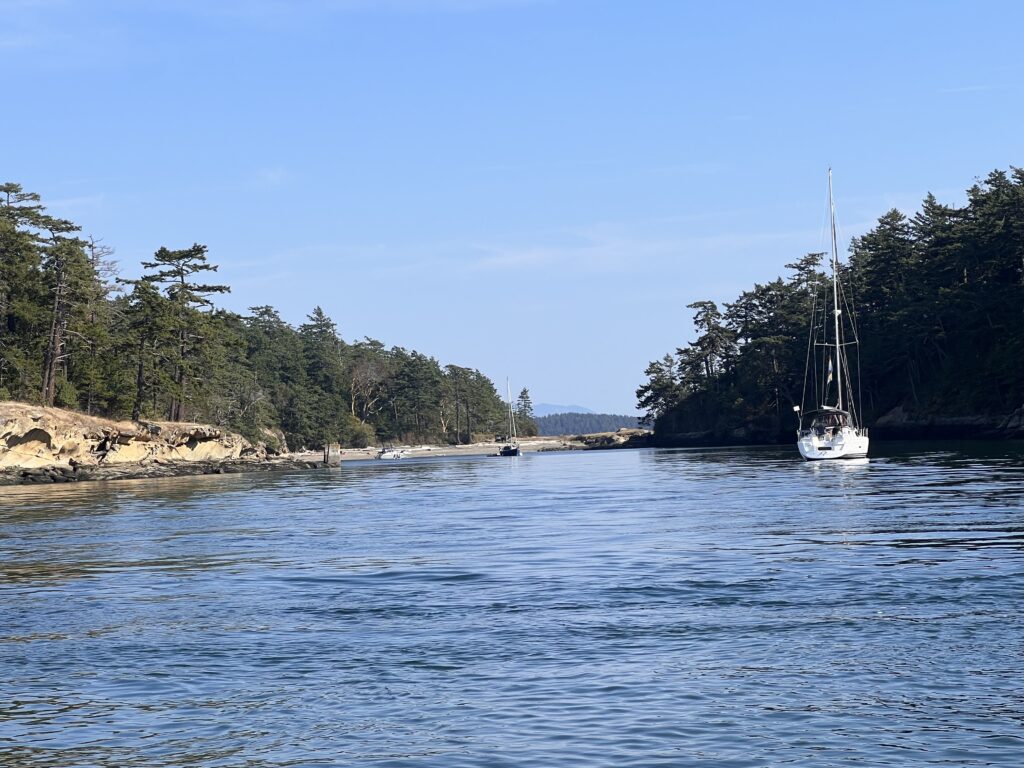
Nestled between the U.S. mainland and Vancouver Island, the San Juan Islands are among the most scenic and rewarding fishing grounds in the Pacific Northwest. Known for their dramatic shorelines, kelp forests, and nutrient-rich waters, they provide an ideal habitat for Chinook and Coho salmon.
Salmon season peaks in summer through early fall, when warm days and cool mornings make for near-perfect fishing conditions. Chinook (King) salmon migrate through the islands from July to September, followed by Coho later in the season.
Marine Area 7, the primary fishing zone surrounding the islands, is renowned for its deep channels and swirling currents. Experienced anglers treat these tidal flows like a living river, predicting where salmon will hold, feed, and run.
Experienced anglers, we were not, so we hired a local guide to bring us out on the water for the day.
Leaving It To The Expert Salmon Fishing Guides
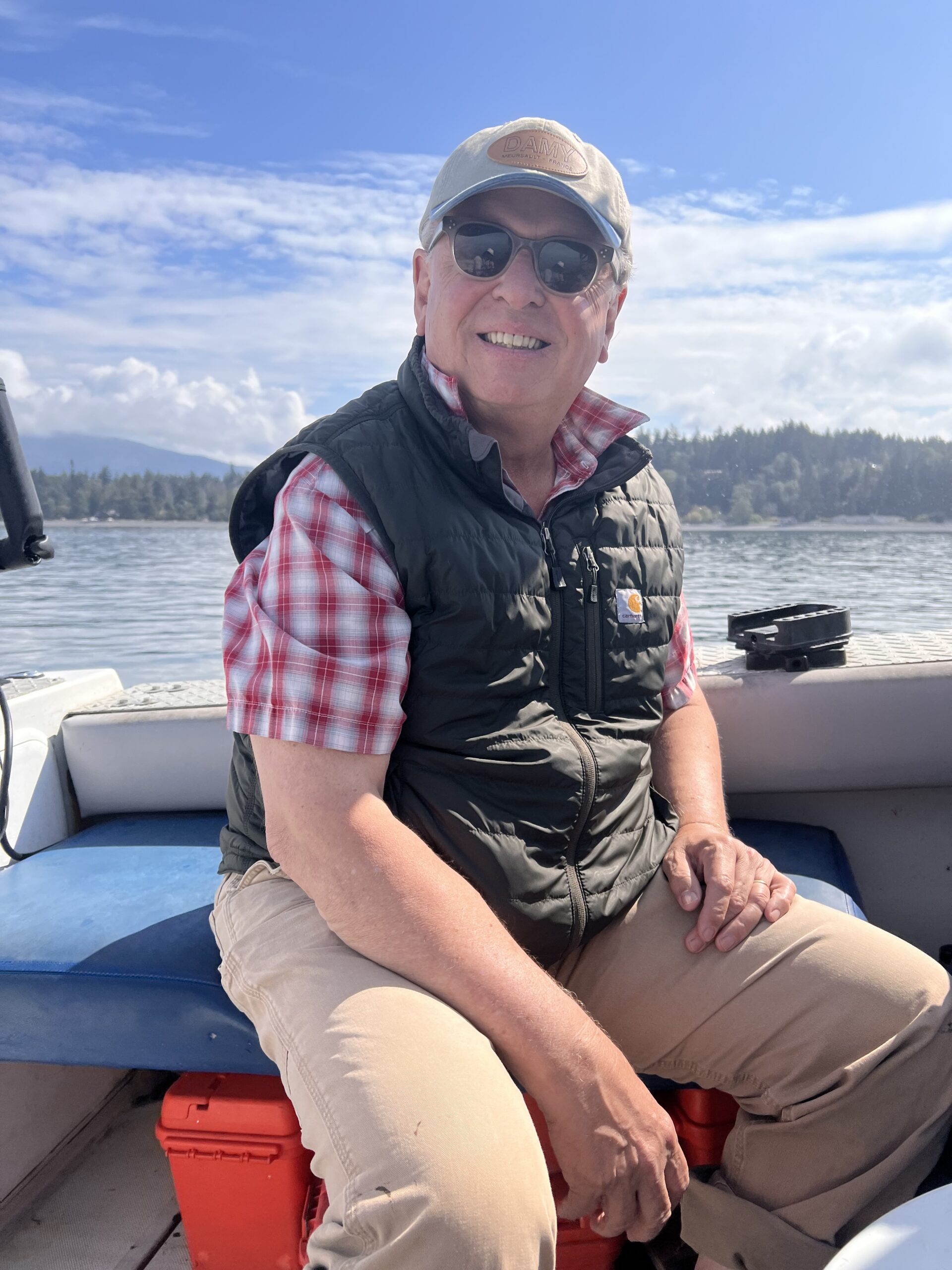
 Our guide met us in thigh deep water on one of the island’s rocky beaches, coffee steaming in the cold light.
What gave us away as novices: the determination to bring the cooler of 00 Wines Chardonnay onto the boat while stumbling over beach stones, or the sun hats without a splash of seawater stains on them yet?
He was used to the Californians and Oregonians and our morning enthusiasm, as he checked the gear nimbly and pointed toward open water. It was his job to bait the hooks and set up the lines, he smiled, as we settled into the front seats of the boat, not knowing how or when to hold onto the railings. It was our job to be cool and not let the salmon flip out of his net after reeling one in.
The lines went out, and for a while there was only the steady rhythm of the boat, the sound of gulls overhead, the occasional flicker of silver just beneath the surface. When the rod finally bent, we leaped toward the action, at first unsure how fast the reel operated. You pull, it pulls back. The first salmon came up shining, its scales catching light like molten rose gold. It’s a living thing that doesn’t want to be caught. Our guide didn’t waste a second. Out came the knife, quick and clean. No wasted motion.
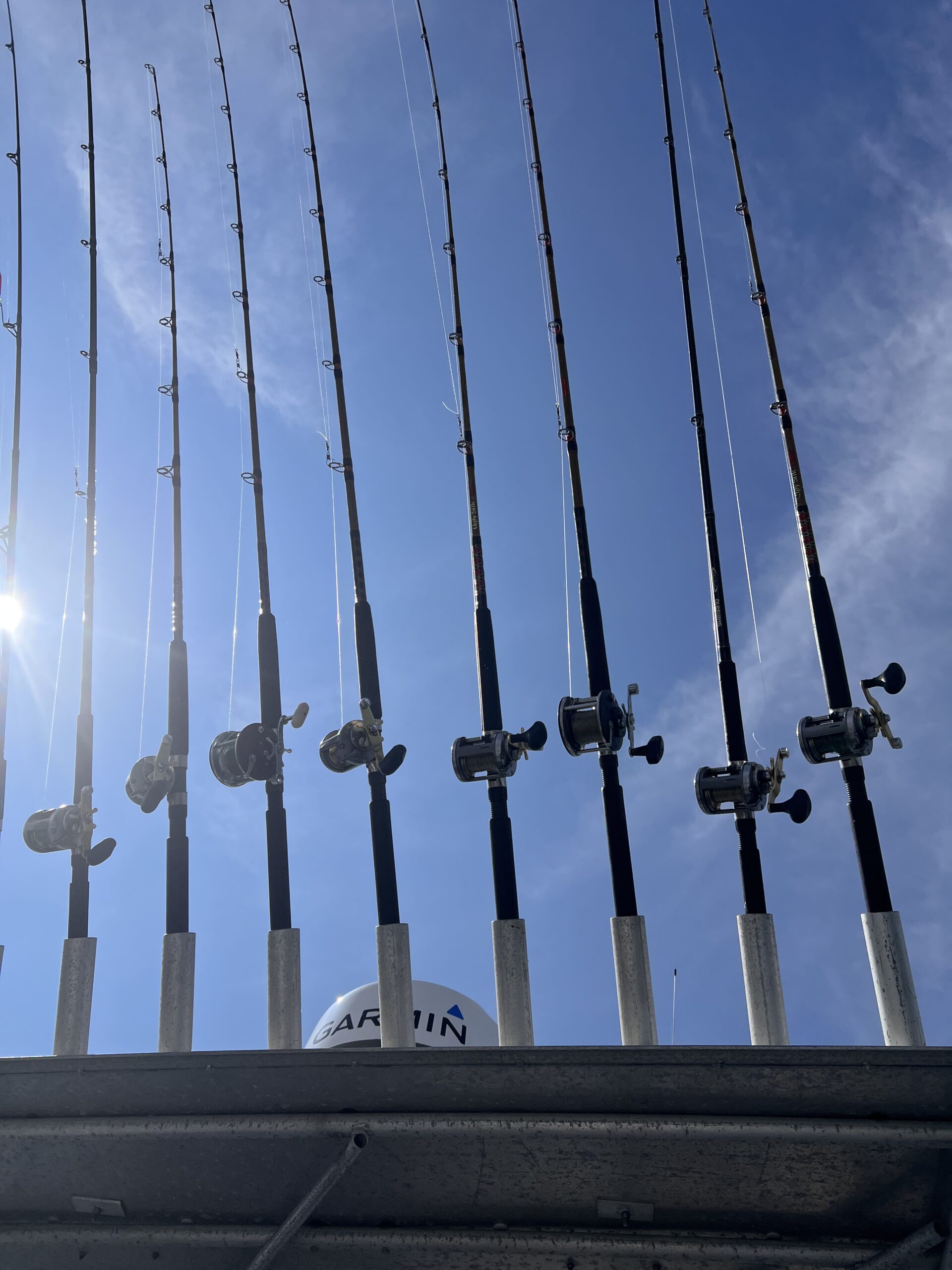
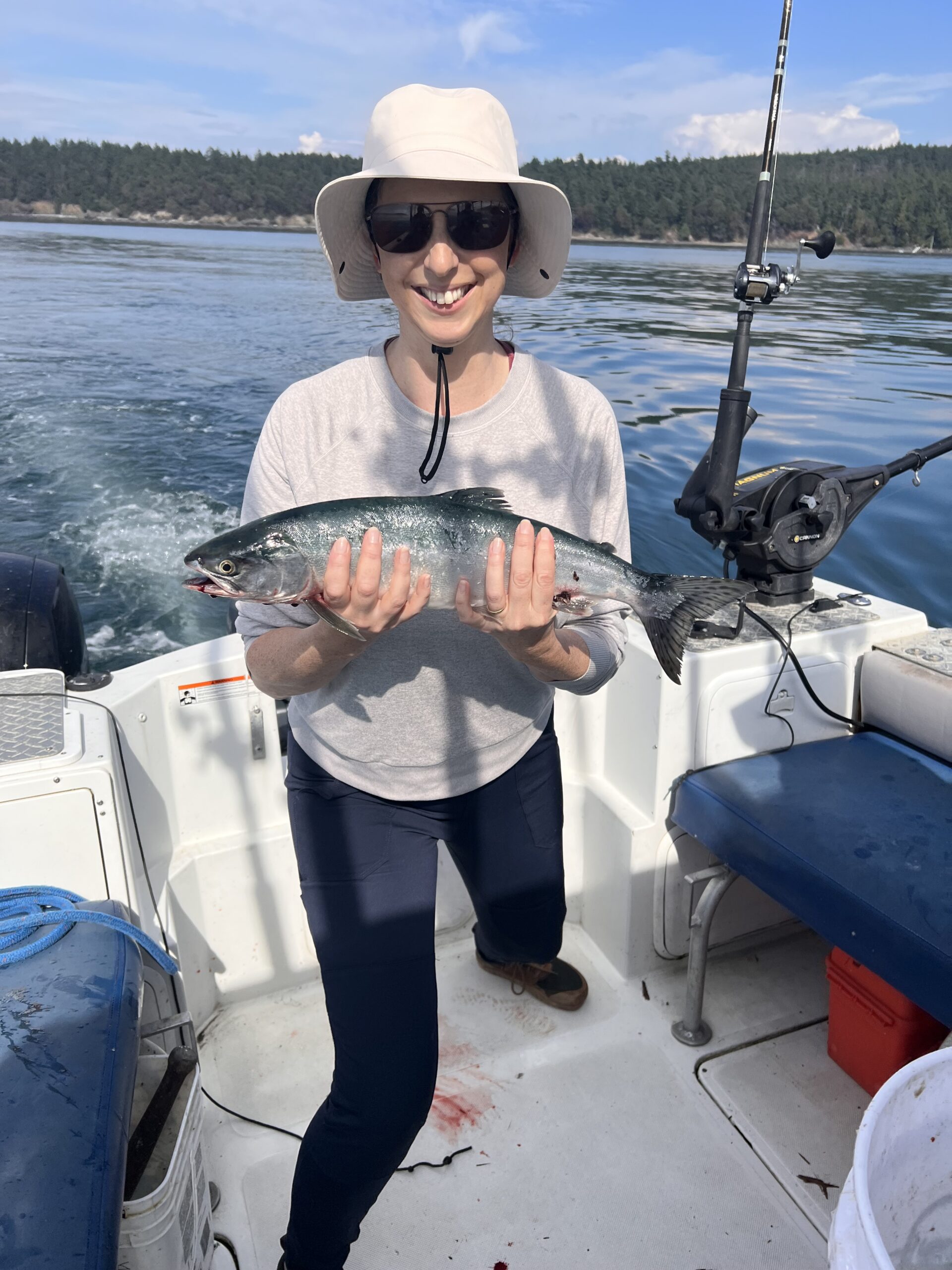
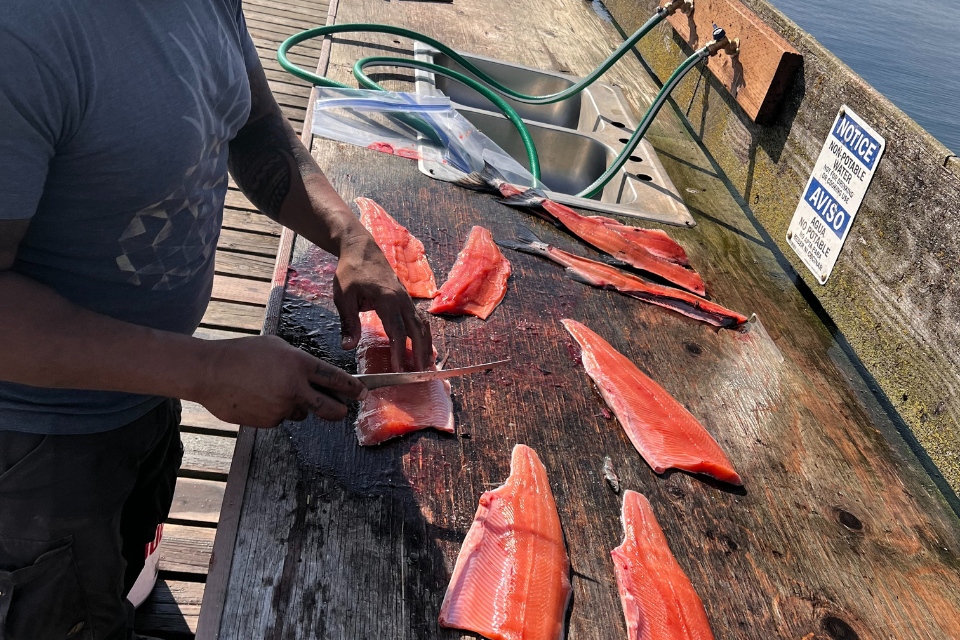
We worked our way toward a small neighboring island, one of those places with a single dock, a weathered shed, and the smell of cedar and diesel baked into the planks. The guide tied off, found a familiar wooden board, and got to work. No gloves, just a small stainless sink station, and years of repetition. He filleted each fish cleanly, rinsing the blade between strokes. The sound of it: steel against bone, gulls crying overhead, the soft slap of waves against wood, felt ancient, almost sacred. When he finished, he handed me two large ziplock bags with our catch, still warm from the fish’s own heat. “That,” he said, “is as fresh as it gets.”
Bonus Crabs
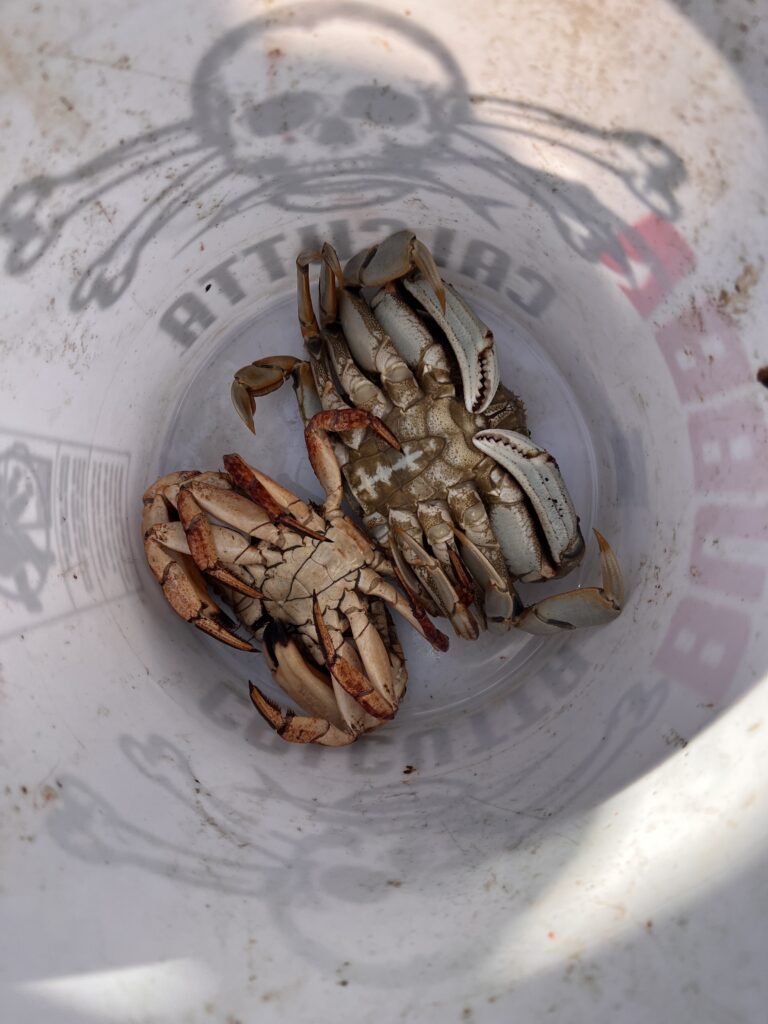 Before heading back, we checked the crab pots we’d dropped a few hours earlier. You could smell them before you saw them: that sweet, briny funk that lets you know dinner’s going to be good. The traps came up heavy, full of Dungeness crabs, claws snapping at the light. “That’s the good kind of noise,” the guide said, laughing. The next tool in his tackle that he brandished was a kind of metal measuring device, to ensure that our crabs were large enough to be legally harvested. Too small, and one must toss them back into the water. They live to see another day.
The Silence of Success
The ride back was quiet, the kind of quiet that doesn’t need filling. The boat hummed low against the surface. The air had shifted. The morning’s bite had softened into something warmer, sweeter, carrying the smell of salt and cedar smoke from the shore.
We passed the island where we’d cleaned the salmon, now just a smudge of green and gold in the distance. I could still see the dark stain of seawater on the dock, the gulls circling in lazy arcs, the rhythm of the tide rolling in like breath. The fillets lay packed in ice beside us, glinting faintly with the pink of something that was alive only hours ago.
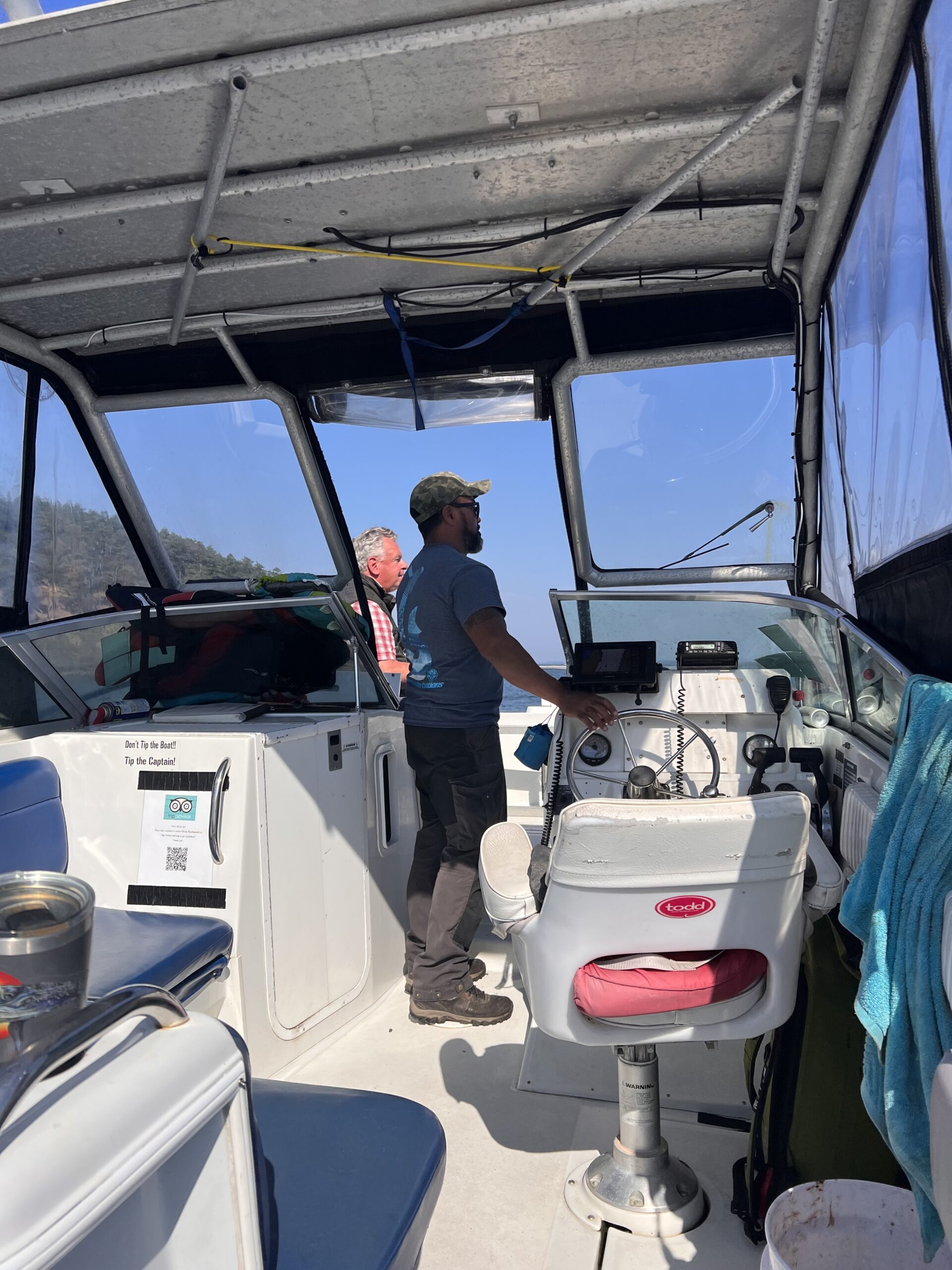
The guide sat at the helm, one hand on the wheel, the other resting on his knee. He didn’t talk much but he didn’t need to. His whole body language said it: another good day, another clean catch.
Preparing the Catch

Our Airbnb sat high on a bluff, half-hidden by madrona trees, with a deck that looked straight out over the channel. Inside, it was cozy with ecclectically decorated walls, cedar floors, a stack of mismatched dishes, and a kitchen that was made for preparing the catches of many weekend guests before us: cast iron pans, ample sharp knives, drawers bursting with thin metal pokers and crackers, and salt in a mason jar. The kind of place built for evenings like this.
We unpacked the day like a small ceremony: the fish, the crab, the wine.
There’s a kind of reverence that comes from bringing your own catch home. It’s not about showing off; it’s about paying attention. You clean slower. You cook more carefully. You open the wine after scrubbing the sandy salt water off your hands.
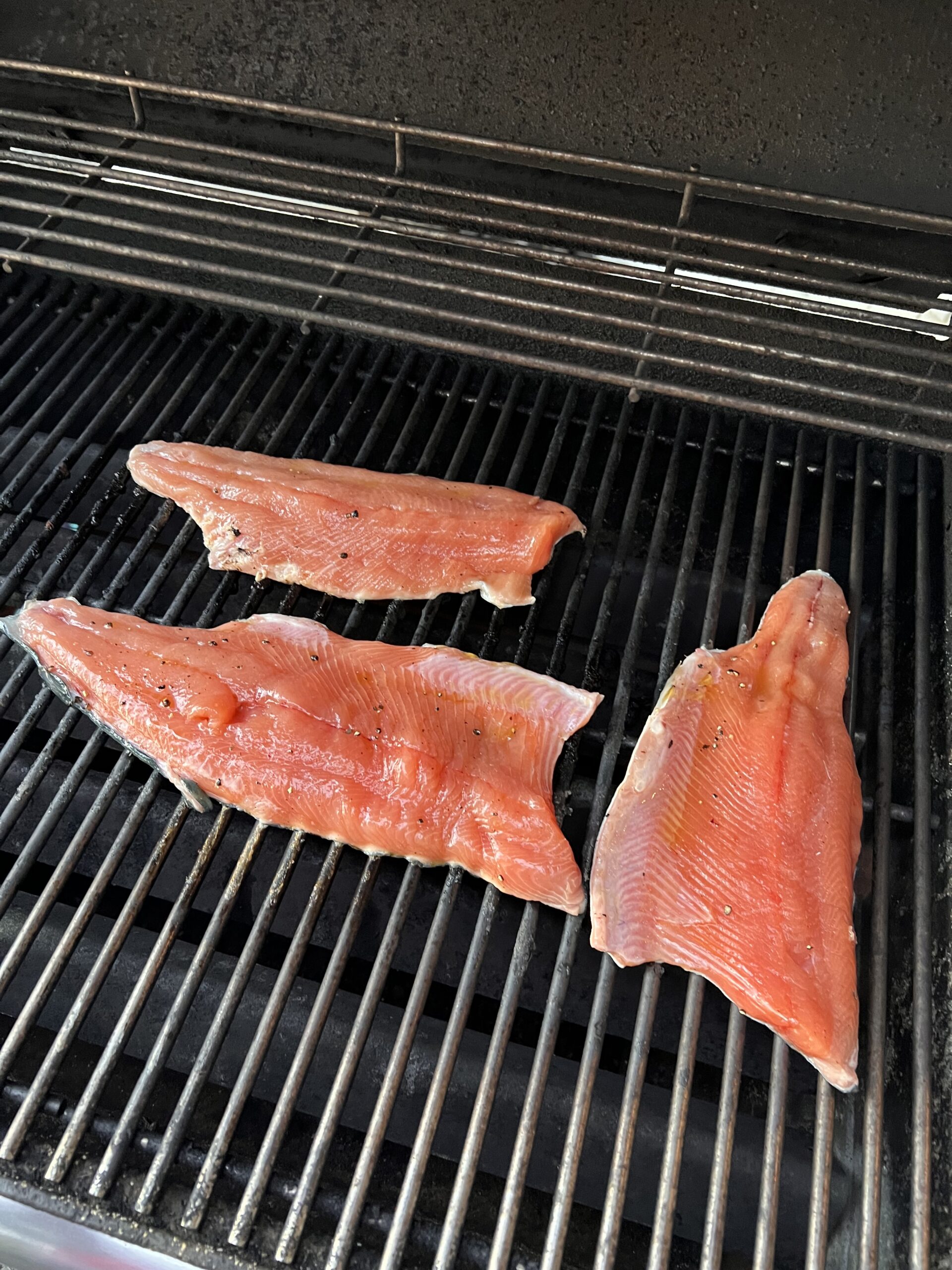
The salmon fillets went directly on the outdoor grill.
The crabs, dropped (murdered) in a deep sautee pan of boiling water.
That was it.
The wine however, now that was a process.
Glasses out, winekey located, and it was time to celebrate.
Chardonnay : The Perfect Pairing for Dungeness Crab and Pacific Northwest Salmon
I reached for the 00 Wines VGW Chardonnay bottle that I had pulled out of the cooler an hour before to raise the temperature of the bottle. If one serves 00 Wines Chardonnay too cold, the elegance of the perfume is muted. The natural Aquitaine Liege cork came out with that soft sigh that always feels like a beginning. In the glass it shimmered a light gold, the kind of color that makes you stop for a second before you drink to appreciate the depth of the hue. On the nose: white flowers and pollen, a faint wash of wet stone and green-apple skin. On the palate: taut lime, pear, a hint of citrus peel, layered over a creamy thread of texture that gives the wine weight without clumsiness. There’s drive: mineral edge and tension, and yet it balances richness with a bright spine, the finish lingering with subtle salinity and that clean, pure Willamette Valley terroir clarity.
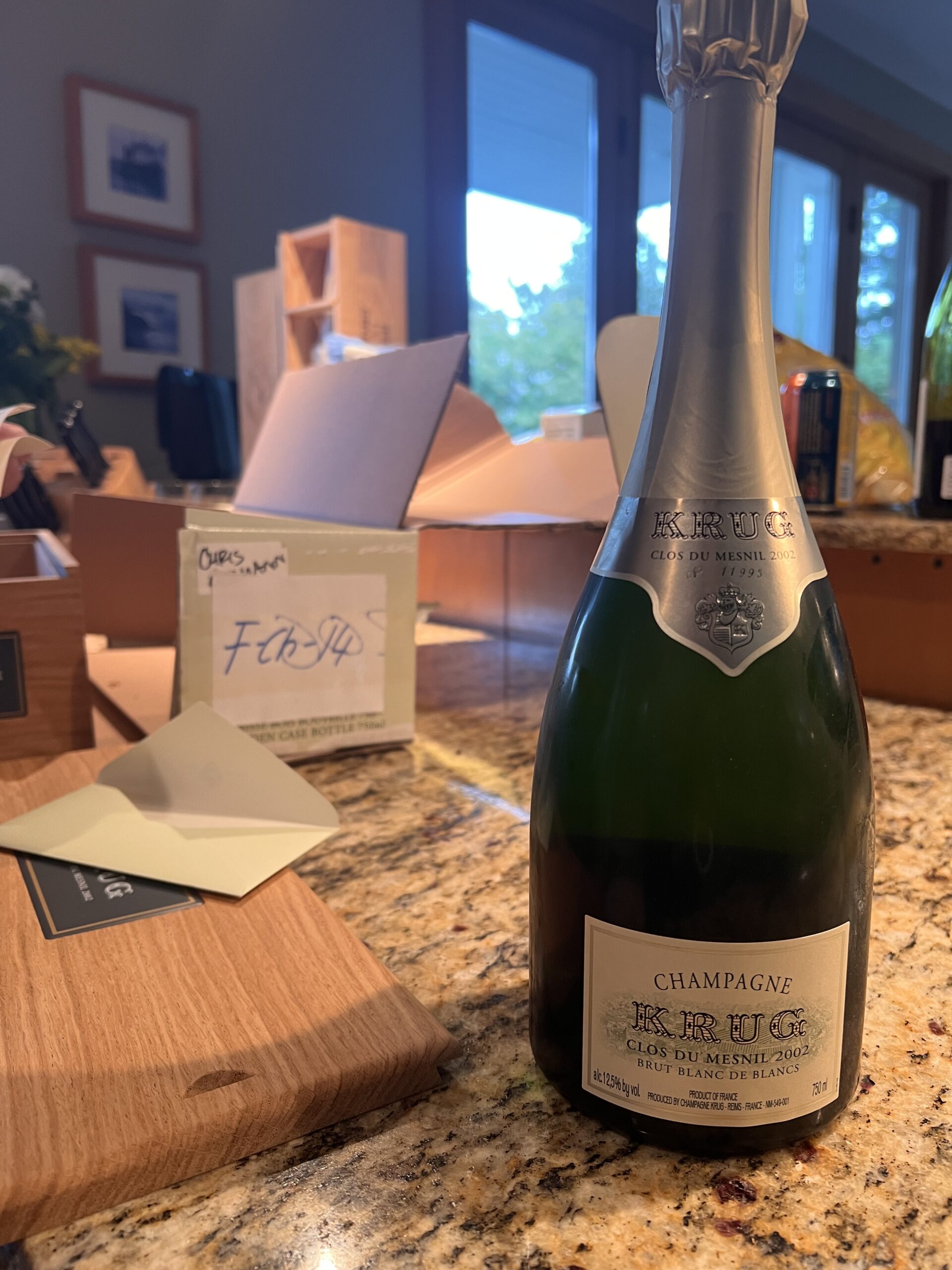
While the salmon cooked, we opened the Krug Clos du Mesnil, one of those wines that humbles you just by holding it. It’s all chalk and steel and quiet power. If the VGW is conversation, Clos du Mesnil is meditation. It’s structured, serious, endlessly deep. On the nose: crisp lemon oil, slate and chalk dust, a whisper of mint and white pepper, maybe a delicate layer of brioche that nods to the wine’s time in our cellar. On the palate: razor-sharp acidity, citrus pulp and preserved lemon, then layers of mineral nerve and astonishing persistence. The finish stretches on and on, the tactile impression of chalky texture, a faint bitter almond edge, and that bottle’s signature tension.
We cracked the Dungeness crab, still warm, shells bright and fragrant, the sweet meat glistening against the knife. I dipped a piece in melted butter, then took a sip of the Clos du Mesnil. For a moment, everything went quiet.
The VGW had spoken in sunlight and cream; the Clos du Mesnil spoke in shadow and stone. Together, they made sense of the day: sea and land, strength and restraint, wildness and control.
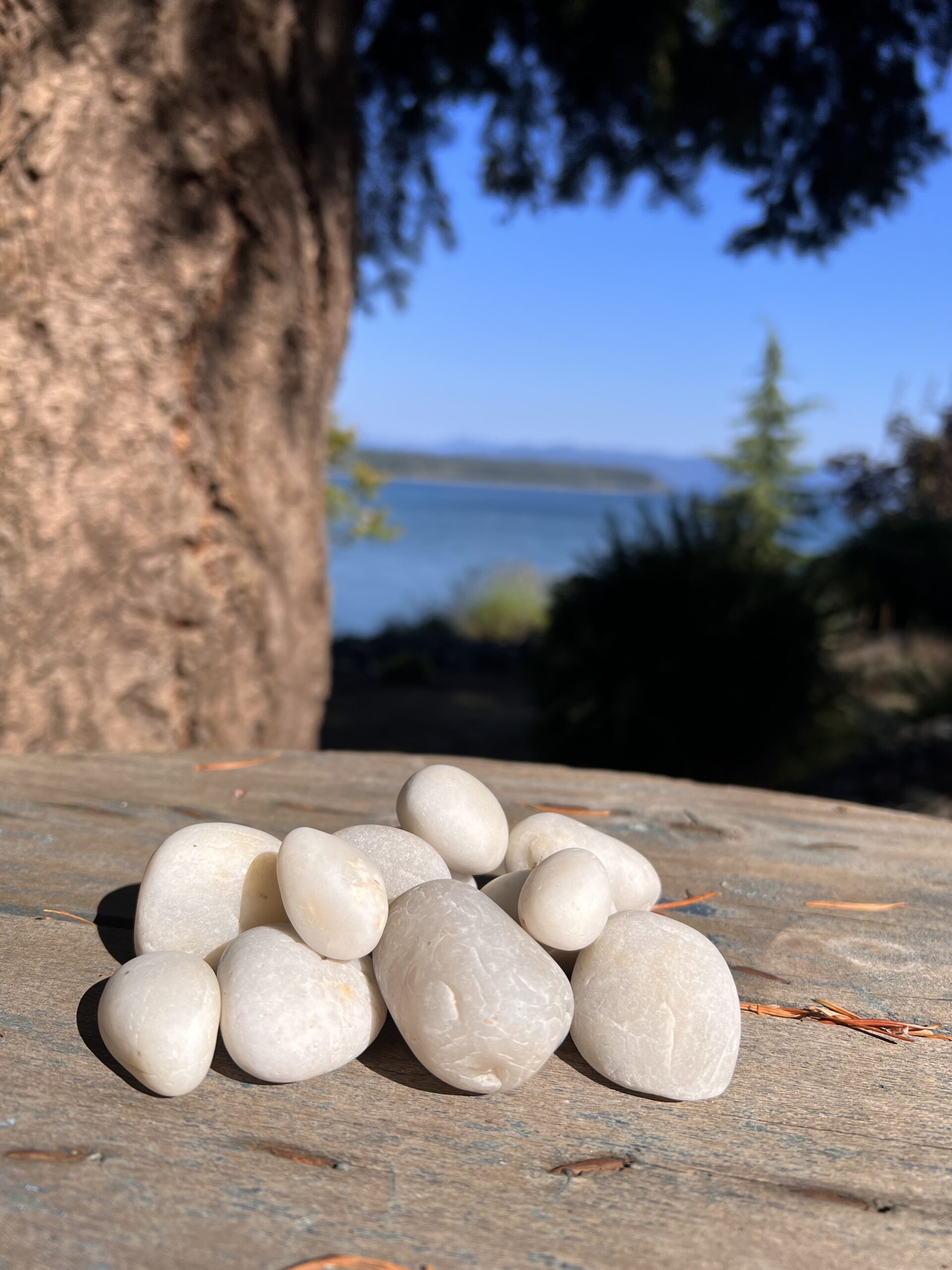
We lingered long after the plates were cleared, the glasses still catching what was left of the evening light. Outside, the tide moved back in, steady and inevitable. Inside, we said nothing.
We just listened to the ocean breathe and let the wines finish their stories.